Why Natural Materials Are Replacing Trendy Finishes in Luxury Mountain Homes
- Tom Burke
- Jan 9
- 2 min read

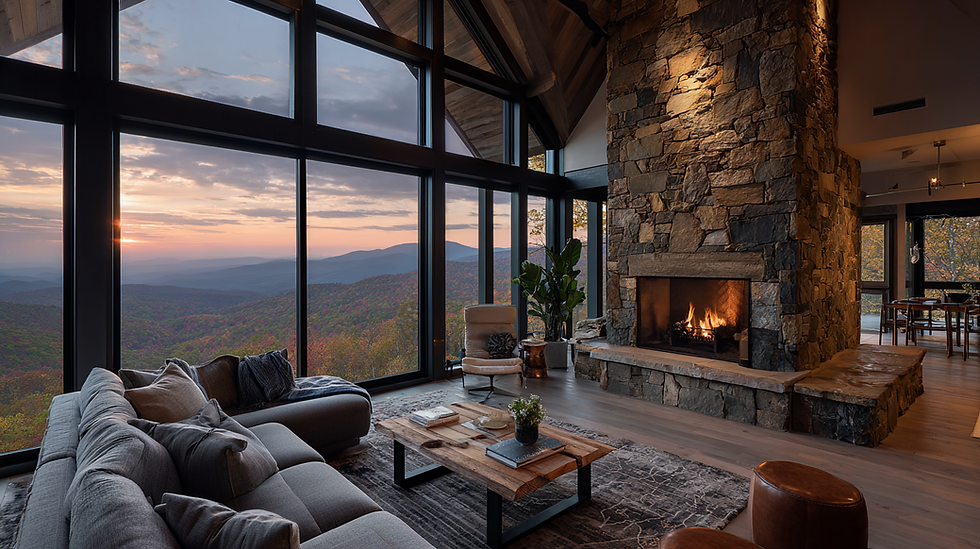
Design trends come and go, but materials tell the real story of a home. As buyers move away from the sharp lines and high-contrast finishes of modern farmhouse design, there’s a clear shift happening in North Georgia: natural materials in luxury mountain homes are becoming the new standard.
This isn’t about following a fad. It’s about homes feeling grounded, authentic, and timeless—qualities that matter deeply in places like Blue Ridge, Ellijay, and along Lake Blue Ridge. Buyers aren’t just purchasing square footage here; they’re buying an experience, and materials play a huge role in how that experience feels the moment they walk through the door.
Why natural materials in luxury mountain homes resonate with buyers
Natural materials age gracefully. They don’t scream for attention, and they don’t rely on contrast to feel luxurious. Instead, they create warmth, texture, and a sense of permanence that works especially well in mountain and lake settings.
In areas like Cherry Log and Morganton, buyers consistently respond to homes that feel like they belong to the landscape rather than compete with it. Wood, stone, and softer finishes do exactly that.
Natural wood: the backbone of mountain luxury
Painted finishes had their moment, but today’s buyers are gravitating back to exposed and lightly finished wood. Wide-plank floors, ceiling beams, and cabinetry with visible grain create depth without excess.
Wood brings warmth to large spaces and prevents luxury homes from feeling sterile. In mountain properties, it also connects the interior to the forested surroundings—something buyers instinctively appreciate, even if they can’t articulate why.
Learn more about wood design trends here
Stone and masonry that feel timeless, not trendy
Stone fireplaces remain emotional anchors in mountain homes, but the style has shifted. Instead of overly symmetrical or highly polished stone, buyers prefer irregular shapes, softer mortar lines, and materials that look as though they’ve always been there.
This kind of stonework doesn’t date a home. It reinforces the idea that the property is meant to last, which is especially important for second-home buyers thinking long term.
Martha Stewart knows a bit about design, go here for some inspiration from her.
Plaster, limewash, and softer wall finishes
Flat white paint is giving way to walls with subtle movement. Plaster and limewash finishes introduce texture that changes with light throughout the day, making rooms feel alive rather than static.
In luxury mountain homes, this softness balances large windows, tall ceilings, and expansive views. It’s one of those details buyers may not notice immediately—but they feel it.
Metal accents that age instead of shine
Highly polished black fixtures are being replaced by softer metals like aged brass, bronze, and iron. These finishes patina over time, adding character rather than wear.
This matters in mountain environments where homes are lived in, not preserved like showrooms. Buyers want finishes that look better after years of use, not worse.
Why these materials help homes sell
Homes built or updated with natural materials photograph better, show better, and age better. They appeal to a wider range of buyers because they don’t rely on a single trend to feel current.
From a resale perspective, natural materials in luxury mountain homes reduce buyer objections. They make spaces feel calm, intentional, and emotionally inviting—exactly what buyers are looking for when choosing a retreat property.


Comments