Dock Rights and TVA Shoreline Rules for Waterfront Property in North Georgia


If you’re considering waterfront property in the North Georgia mountains, one of the most misunderstood topics is dock ownership. Many buyers assume that if a home sits on the water, a dock automatically comes with it. In reality, waterfront property around Lake Blue Ridge and other TVA-managed lakes operates under a completely different system than traditional private lakes.
Understanding dock rights, shoreline control, and TVA regulations can make the difference between purchasing a dream property and facing unexpected limitations after closing.
This guide explains how dock rights actually work, what the TVA controls, and what buyers should verify before purchasing waterfront property in Blue Ridge, Ellijay, or surrounding mountain communities.
Who Actually Owns the Shoreline?
One of the biggest surprises for waterfront buyers is learning that homeowners typically do not own the land between their property and the water on TVA lakes.
Instead, the Tennessee Valley Authority owns and manages this shoreline through what is known as the TVA Shoreline Management Program.
This means:
• Your deed usually stops at a defined contour line
• The land between your property and the water is TVA-controlled
• Any improvements require TVA approval
For buyers relocating from Florida or private lake communities, this is often a major adjustment.
👉🏻To learn more about how this affects property boundaries, see my Complete Guide to Waterfront Property in North GA.
Understanding the 1680 Contour Line
On Lake Blue Ridge, the key boundary is known as the 1680 contour line. This elevation line marks the legal separation between private property and TVA-controlled shoreline.
What this means in practical terms:
• Everything below the contour line belongs to TVA
• You cannot build permanent structures there without permission
• Dock placement must comply with TVA guidelines
This contour system ensures environmental protection, erosion control, and public access management.
How Dock Permits Work
Unlike private lakes, docks on TVA lakes are not owned outright. Instead, they operate under a TVA permit system.
Each dock:
• Requires a TVA permit
• Must meet size and design regulations
• Is tied to a specific property address
When purchasing a waterfront home, it’s critical to confirm that the dock permit transfers properly during the transaction.
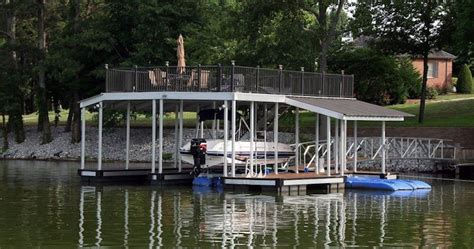
Types of Approved Docks
The TVA allows different dock configurations depending on shoreline conditions and water depth.
Common types include:
• Floating single-slip docks
• Double-slip docks for larger properties
• Community docks in certain subdivisions
However, there are strict limits on:
Dock size
Roof structures
Lighting
Anchoring systems
Buyers often assume they can expand an existing dock, but TVA approval is always required.
Can You Add a Dock Later?
Not every waterfront property qualifies for a dock permit.
Eligibility depends on:
Water depth
Shoreline slope
Environmental impact
Distance from neighboring docks
This is why a “dockable” designation in MLS listings is extremely valuable.
Properties with transferable permits often command higher prices and stronger resale demand.
Why Dock Rights Affect Property Value
In North Georgia’s waterfront market, dock rights are often the single biggest factor influencing value.
Two homes with identical views can differ significantly in price based on:
Dock size
Permit status
Ease of shoreline access
For investors and second-home buyers, a transferable dock permit adds both lifestyle benefits and long-term equity stability.
What Buyers Should Always Verify
Before purchasing waterfront property, buyers should confirm:
• TVA permit status is active and transferable
• Dock meets current compliance standards
• Shoreline access is practical and safe
• No pending TVA violations exist
Working with a local expert familiar with TVA regulations is essential to avoid costly surprises.
Why TVA Rules Actually Protect Property Owners
Although TVA regulations may seem restrictive at first, they serve an important purpose.
By controlling shoreline development, the TVA helps maintain:
Water quality
Natural beauty
Property value stability
This is one of the reasons waterfront homes around Lake Blue Ridge retain strong long-term demand compared to many private lake communities.
👉🏻 Find more information on the topics discussed here and many more in my "knowledge" menu


Comments