The 1680 Contour Line Explained: The Most Important Line on Lake Blue Ridge


If you’re buying lake property in North Georgia — especially on Lake Blue Ridge — there is one line that matters more than price per square foot, finishes, or even the view.
The 1680 contour line.
Most buyers don’t learn about it until they’re already under contract. Some don’t learn about it until after closing.
This post exists to prevent that mistake.
It also ties directly to North Georgia Lake Properties and Lake Blue Ridge: What Buyers Must Understand Before Buying Lakefront, because the 1680 contour line quietly controls how lakefront ownership actually works here.
What the 1680 Contour Line Is
The 1680 contour line represents 1,680 feet above mean sea level and is the fixed elevation used by the Tennessee Valley Authority to manage shoreline on Lake Blue Ridge.
This line does not move with the water.
Water levels rise and fall.The contour line stays exactly where it is — permanently.
Everything below that elevation falls under TVA shoreline management.
Why TVA Uses the 1680 Contour Line
Lake Blue Ridge is a managed reservoir, not a natural lake.
TVA uses the 1680 contour line to:
• Protect water quality
• Control erosion
• Manage docks and shoreline use
• Preserve navigation and flood capacity
• Create consistency across lakefront parcels
Without this line, shoreline use would be chaotic and environmentally destructive.
For buyers, it means ownership and control are not the same thing.
What You Do — and Do Not — Control Below the 1680 Contour Line
This is where expectations often break.
Below the 1680 contour line, TVA controls:
• Dock placement and size
• Shoreline stabilization (riprap, walls, steps)
• Clearing or trimming vegetation
• Access paths to the water
• Any construction or grading
Even if that land looks like part of your yard, it is regulated.
You cannot modify it without TVA approval.
This directly affects how lakefront properties compare — and why not all “lakefront” listings are equal.
What You Typically Own Above the 1680 Contour Line
Above the 1680 contour line, ownership usually behaves like normal real estate.
This area is governed by:
• County zoning
• HOA rules (if applicable)
• Septic and soil regulations
• Setbacks and building codes
This is where homes, decks, patios, and most improvements must stay.
The closer the home sits to the contour line, the more carefully buyers should review restrictions.
Why the 1680 Contour Line Matters More Than Water Level
One of the most common buyer misunderstandings happens during winter drawdown.
Water recedes. Exposed shoreline appears. Buyers assume they’ve gained usable land.
They haven’t.
That exposed ground is usually below the 1680 contour line, meaning:
• You can’t landscape it freely
• You can’t terrace it
• You can’t fence it
• You can’t build on it
This is why winter showings without context create confusion.
The 1680 Contour Line and Dock Permits
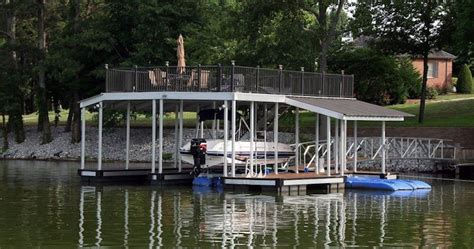
Dock permits on Lake Blue Ridge are evaluated in direct relation to the 1680 contour line.
TVA looks at:
• Shoreline length along the contour line
• Cove vs main-channel location
• Existing dock density
• Environmental impact
• Navigation safety
Owning lakefront does not guarantee dock rights.
This is one of the biggest pricing and resale drivers on the lake — and one of the easiest assumptions to get wrong.
If dock access matters, it must be verified early.
Main Channel vs Cove: How the Line Behaves Differently
The contour line behaves differently depending on where a property sits.
Main-channel properties often have:
• Steeper shorelines
• Shorter horizontal distance to water
• Greater wave and wind exposure
Cove properties often have:
• Longer stretches of land below the contour line
• Calmer water
• Potential sediment buildup
• Different dock feasibility
Neither is inherently better — but they carry different long-term realities.
How the 1680 Contour Line Affects Resale
Buyers who understand this line make better long-term decisions.
From a resale standpoint, the 1680 contour line affects:
• Dock clarity in listings
• Buyer confidence
• Appraisal comparisons
• Inspection questions
• Days on market
Listings that explain shoreline rights clearly tend to perform better than those that rely on assumptions or vague “lakefront” descriptions.
How Buyers Should Verify the 1680 Contour Line
Before closing on any Lake Blue Ridge property, buyers should:
• Review TVA shoreline maps
• Examine plats and topo surveys
• Confirm dock permits or eligibility
• Understand access path approvals
• Ask how the shoreline behaves seasonally
This is not a step to rush — and not one to skip.
Why This Matters Even for Lake Access Homes
Even lake access and community dock homes are influenced by the 1680 contour line.
Shared docks, paths, and shoreline improvements are still subject to TVA approval.
Understanding the line helps buyers compare lake access vs true lakefront accurately — without overpaying for assumptions.
Bottom Line
The 1680 contour line is the most important invisible boundary on Lake Blue Ridge.
If you remember nothing else:
• It never moves
• It defines control, not just elevation
• It affects docks, access, and resale
• Ignoring it leads to expensive surprises
Buyers who understand the 1680 contour line enjoy Lake Blue Ridge ownership far more than those who don’t.


Comments