What Should You Check Before Buying a Blue Ridge Cabin in Fall?


There’s something about touring cabins around Blue Ridge in the fall that makes almost every property look good.
The leaves are changing, there’s probably a fire going somewhere, the temperature is finally comfortable, and even a fairly ordinary deck can suddenly look like the place you want to spend the rest of your life.
That’s also exactly why I think buyers need to pay attention.
A Blue Ridge cabin in fall can show you things that are much harder to evaluate during the summer. Cooler weather lets you see how the house heats. Rain makes drainage easier to understand. Falling leaves expose roofs, gutters, neighboring properties and views. And if the cabin is going to be a second home, fall is a pretty good time to start asking what happens when nobody is there during January.
The cabin may be beautiful. I still want to know how it works.
👉🏻 Why Fall Might Be the Best Time to Evaluate Blue Ridge Real Estate
What Should You Check in a Blue Ridge Cabin in Fall?
I’d start with the things that become more important as temperatures begin dropping.
How does the house heat? Does it rely primarily on a heat pump, propane, mini-splits, fireplaces or some combination of them? Are there areas of the house that stay noticeably colder than others? If the great room has a twenty-foot ceiling and a huge wall of glass, does all the warm air seem to be sitting somewhere near the rafters while you’re freezing on the couch?
None of that automatically means there’s a problem.
Mountain homes are often designed very differently from suburban homes. Big windows, open floor plans, vaulted ceilings and stone fireplaces are part of what people love about them.
But a beautiful cabin and an efficient cabin are not always the same thing. I’d rather understand that before closing.
Take a Hard Look at the Fireplace and Chimney
Fireplaces are a big part of the Blue Ridge cabin experience, but I wouldn’t treat one as decoration.
If the home has a wood-burning fireplace, I want to know how often it has been used, whether the chimney has been maintained and whether there are any obvious signs of water intrusion or damage.
Gas fireplaces deserve attention too. Is the system functioning? Is it connected to propane? Is the tank owned or leased? How large is it? What else in the house uses propane?
A fireplace can be a great supplemental heat source, but I wouldn’t assume that a giant stone fireplace means the house is prepared for winter.
It may be. I just want to verify what we actually have.
Check the Gutters Before All Those Leaves Become Your Problem
Leaves are part of the deal when you own a wooded mountain property.
A cabin surrounded by huge hardwoods can be absolutely gorgeous in October, but those same trees can dump an astonishing amount of material onto a roof.
That makes fall a good time to look at gutters, valleys and roof drainage.
Are the gutters already packed with leaves? Are gutter guards installed? Where do the downspouts discharge? Is water being carried away from the foundation or dumped against the house?
I’m also looking at how close tree limbs are to the roof and whether there are obvious areas where leaves and moisture are collecting.
This doesn’t mean I’m trying to turn a showing into a home inspection. I’m simply trying to notice things worth investigating further.
Crawlspaces Deserve More Attention Than They Usually Get
This probably isn’t the glamorous part of buying a cabin.
Nobody drives to Blue Ridge dreaming about the crawlspace.
But moisture management is a big deal in mountain homes, especially when the house is built into a slope.
Fall rain can make crawlspace conditions easier to evaluate. If there’s a strong damp smell, visible moisture, standing water or signs that runoff is moving toward the house, those are things I want a qualified inspector looking at carefully.
A crawlspace may have encapsulation, dehumidification or drainage systems already in place. That can be perfectly normal. The question is whether the system is doing what it’s supposed to do.
A gorgeous kitchen doesn’t make moisture problems disappear.
Pay Attention to the Roof — Even If You Can’t See Much of It
Cabin roofs can be difficult to evaluate from the ground. Steep pitches, multiple levels and wooded lots often mean you can only see portions of the roof during a showing. Fall can make things a little easier once leaves start dropping, but I’m still interested in the basics.
How old is the roof? Are there obvious stains or signs of previous leaks inside? Are valleys collecting debris? Are large branches hanging over the structure?
Does the home have a metal roof, shingles or something else?
Mountain homes can take a beating from falling limbs, wind, rain and heavy leaf buildup. A roof doesn’t need to be new, but its age and condition belong in the overall financial picture.
If It’s a Second Home, Think About What Happens When Nobody Is There
This is a big one.
Many Blue Ridge cabins aren’t occupied full time. If you’re going to be in Atlanta or Florida for several weeks during the winter, what happens at the house while you’re gone?
That conversation can involve thermostats, freeze protection, water shutoffs, generators, propane levels, security systems, smart-home monitoring and whether someone local is available to check the property if there’s a major weather event.
If the property has a well, I also want to understand how the system is protected from freezing. Exterior plumbing deserves attention too.
None of this is particularly complicated once you have a system in place.
But second-home ownership is easier when you think about these things before you leave the house empty for the first time.
Generators Can Be More Valuable Than Buyers Realize
A generator isn’t mandatory for owning a home around Blue Ridge. But I pay attention when a property has one.
Mountain homes can be more vulnerable to power interruptions simply because of trees, terrain and the number of properties served by more rural utility infrastructure.
If there’s a whole-house generator, I want to know what it powers, what fuel it uses and whether it appears to have been maintained.
If there isn’t one, that doesn’t automatically bother me but the more remote the property is — and the more dependent the home is on electrically powered systems — the more useful backup power can become.
That’s particularly true for a second home that may be sitting unattended.
Fall Can Reveal Whether “Privacy” Is Really Seasonal
This is one we just talked about in the seasonal-view discussion, but it absolutely belongs here too.
A cabin can feel completely secluded in July, then the leaves come down and suddenly you realize there are three other homes on the same hillside. Again, that may not matter
but if you’re paying a premium for privacy, I want to understand exactly what kind of privacy you’re getting.
The same thing can happen with views. You may discover a spectacular mountain view that wasn’t obvious during summer. Or you may discover that the incredible winter view shown in the listing photos disappears behind hardwoods for half the year.
Fall tends to make both situations easier to understand.
Look at the Land Around the Cabin, Not Just the Cabin
One of the mistakes buyers can make in mountain real estate is focusing so heavily on the house that they barely evaluate the land.
Around Blue Ridge, Morganton and Cherry Log, the land can affect almost everything.
How steep is it? Where does water move? Are there retaining walls? How close are mature trees to the house? Is there usable space? Could you realistically build a garage, workshop or guest structure if that matters to you? Where are the property lines?
Fall can make terrain easier to read because you aren’t staring through a wall of summer vegetation. A listing might say the home has approximately five acres. that doesn’t tell me nearly as much as understanding what those five acres actually look like.
Well and Septic Systems Still Matter in the Fall
A lot of homes around Blue Ridge aren’t connected to municipal water and sewer.
That means the well and septic system become part of the property you’re buying.
I want to know where they are, whether records are available, whether there are obvious maintenance issues and whether the systems make sense for the house.
The septic location can also affect future plans. That beautiful flat area where you’re already imagining a garage or swimming pool may not be quite as available as it looks if part of the septic system occupies it.
And with a well, buyers should understand the basics of the system rather than simply turning on the kitchen faucet and deciding everything must be fine.
These are normal parts of owning property in the mountains.
They just deserve attention.
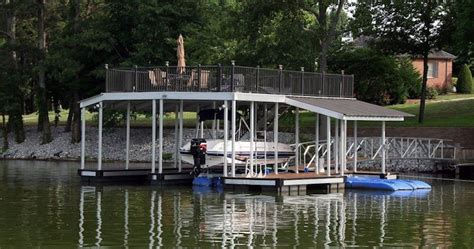
Lake Blue Ridge Cabins Add Another Layer
If the cabin happens to be on Lake Blue Ridge, fall gives us even more information.
Now we’re evaluating the house and all of the normal mountain-home issues, but we’re also looking at shoreline, dock access and seasonal lake levels.
A lake house photographed in July can look very different later in the year.
As TVA lowers the reservoir, more shoreline may become visible and the relationship between the dock and the water can change.
If lake access is a big part of why you’re considering the property, I want to understand that relationship.
A fireplace is replaceable. Lake frontage is not.
A Blue Ridge Cabin in Fall Can Tell You a Lot
The main reason I like evaluating a Blue Ridge cabin in fall is that the property has fewer places to hide.
The leaves are coming down. The weather is changing. The ground may be wet. The heating system is being used. The gutters are doing some actual work. Views and neighboring properties are becoming more visible.
That gives us information.
And when someone is spending hundreds of thousands — or potentially millions — of dollars on a mountain home, I want as much useful information as we can reasonably get.
The goal isn’t to find a perfect cabin, I’m not sure one exists. The goal is to understand the property well enough to decide whether its strengths, weaknesses and maintenance requirements make sense for you.
Because I’m not trying to sell you a cabin, I’m trying to help you make a great decision.
Ready to make your move? If you’re considering buying or selling in Blue Ridge, Lake Blue Ridge or the surrounding mountains and you’re looking for relentless representation, reach out, I’d love the opportunity to help.


Comments