What Lake Blue Ridge Drawdown Can Tell You Before You Buy Waterfront Property

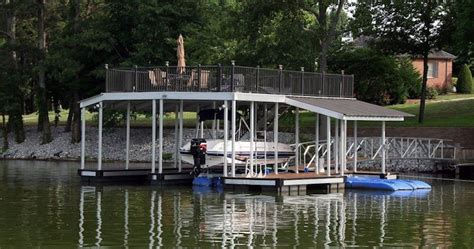
A Lake Blue Ridge home can look pretty convincing in July. The lake is full, the dock is floating exactly where you’d expect it to be, somebody has a boat tied up outside, and the whole thing looks like the version of lake living you had in your head when you started looking.
Then fall comes.
The water starts dropping, more shoreline becomes visible, docks move farther down their ramps, and suddenly you can see things about that property that weren’t nearly as obvious during summer.
That’s why I think Lake Blue Ridge drawdown can be incredibly useful for a buyer. It doesn’t make a good lake property bad, and it doesn’t automatically make one part of the lake better than another. What it does is give you another layer of information about the waterfront you’re actually buying.
And when lake frontage is a major reason a property costs what it does, I want as much information as possible.
What Is Lake Blue Ridge Drawdown?
Lake Blue Ridge isn’t a natural lake. It’s a TVA reservoir on the Toccoa River, and TVA manages its level as part of a much larger river system.
During a year with normal rainfall, TVA says the water level at Blue Ridge Reservoir can vary by about 22 feet between summer and winter. TVA generally begins drawing tributary storage reservoirs down more aggressively after Labor Day as it prepares additional storage capacity for the winter flood season. Actual levels can vary based on rainfall, system conditions and TVA’s operating needs.
So when you buy a home on Lake Blue Ridge, you’re not buying a shoreline that looks exactly the same 365 days a year. That’s not a flaw, it’s simply how the lake works.
I think that's something a lake buyer should understand before closing rather than discovering after moving in.
Lake Blue Ridge Drawdown Can Reveal the Real Shoreline
One of the first things drawdown does is expose more of the shoreline. That can be incredibly informative.
During summer pool, the lake may come right up to a beautifully landscaped edge and make the transition between land and water look almost seamless. As the water recedes, you get a much better look at what’s underneath.
Is the shoreline rocky? Clay? Mud? Steep? Gradual?
Does the lakebed drop quickly away from shore, or is there a broad shallow area extending outward?
None of those characteristics automatically determine whether the property is good or bad. They can however, have a significant effect on how the waterfront looks and functions as water levels change.
A buyer who sees the property only at summer pool may never think to ask. Fall has a way of asking for you.
Your Dock Can Tell You a Lot
The dock is obviously a major part of a Lake Blue Ridge property, and drawdown gives you a chance to see how it behaves outside summer conditions.
A floating dock typically moves as the lake level changes. That means I’m interested in things like the dock ramp, where the dock ends up as the water recedes, how easily you can reach it, and what the surrounding water looks like.
A beautiful dock sitting in plenty of water during July is one thing. What happens in October? November? Winter? That’s a much more interesting question.
TVA defines winter pool as the lowest level expected during the flood season, and its shoreline regulations specifically recognize that docks and other water-based structures sometimes need to accommodate seasonal drawdown conditions.
For a buyer, that means the dock shouldn’t be evaluated as if the lake were static.
It isn’t.
What Does “Deep Water” Actually Mean?
You’ll hear the phrase “deep water” fairly often around lake property. I don’t think buyers should treat it as a magic phrase.
What I want to know is what it means at that particular property. How much water is around the dock at summer pool? What does it look like as the lake drops? Is the dock positioned in an area that appears to retain useful water farther into drawdown? Is the property on a main body of water, a cove, or somewhere in between?
The answers can be very different from one property to another.
And this is exactly where fall becomes helpful.
If you’re paying a premium because you expect convenient boating access, I’d rather evaluate that access while the lake is dropping than simply assume the words “deep water” in a listing mean exactly what you think they mean.
I’m especially cautious about treating any particular water depth as permanent. Reservoir levels change, rainfall changes, and TVA operates the system according to conditions that go well beyond an individual property. TVA provides current elevations and operating guides specifically because reservoir levels vary throughout the year.
The Walk to the Dock Can Change Too
Here’s something that gets less attention than water depth. How do you get from the house to the dock?
On some Lake Blue Ridge properties, the walk is relatively easy. On others, you’re dealing with a substantial hillside. During summer, when the water is higher and the dock is farther up the bank, that walk may feel perfectly manageable. As the lake drops, the dock can move farther down.
Now the question becomes whether those extra feet matter. For a healthy buyer who doesn’t mind stairs, maybe not. For someone who plans to retire in the house, has mobility concerns, regularly has older family members visiting, or simply doesn’t want a major hike every time they take something down to the boat, it can matter a lot.
This is one of those details that doesn’t photograph particularly well in a real estate listing. You really need to experience the property.
Drawdown Can Expose Things You Couldn’t See Before
There’s another advantage to seeing Lake Blue Ridge during lower water. More of the waterfront becomes visible.
You may be able to see rocks, old stumps, changes in grade, erosion, retaining structures, dock anchoring systems and other physical features that were underwater during summer. Again, I’m not pretending that a real estate showing replaces a professional inspection or qualified shoreline evaluation. It doesn’t. but seeing more of the property is rarely a bad thing.
If I have the choice between understanding less about an expensive lakefront property and understanding more, I’ll take more every time.
Not Every Part of Lake Blue Ridge Behaves the Same Way
This is one of the reasons I don’t like treating “Lake Blue Ridge waterfront” as if it were one generic category.
The lake twists through coves, narrows, wider sections and varying terrain. Shorelines differ. Water depth differs. Access differs. The relationship between the house and water differs. Two homes could both legitimately be described as Lake Blue Ridge waterfront and provide very different experiences.
One might sit above a steep shoreline with relatively quick access to deeper water.
Another might have a gentler approach but expose considerably more lakebed as water levels fall. One buyer may prefer the first. Another may love the second.
That’s why I’m much more interested in how a particular property works than deciding that one style of lake frontage is automatically superior.
Don’t Forget the View
Drawdown isn’t just about boating. It can change the view from the house too.
A lake view at summer pool may show a broad uninterrupted expanse of water. During winter, some properties may show considerably more exposed shoreline.
How much that matters is completely subjective.
Some owners barely care because the mountain setting is still beautiful.
Other buyers are paying specifically for a postcard lake view and want to understand how that view changes throughout the year.
Add leaf drop to the equation and things get even more interesting. A heavily wooded Lake Blue Ridge home may gain a much broader water view once the leaves come down, even while the lake itself is dropping.
So fall can produce two changes at once: less foliage between the home and lake, and less water along portions of the shoreline.
That combination can make the property look surprisingly different from its summer version.
TVA Has a Say in What Happens Along the Shoreline
Owning Lake Blue Ridge waterfront doesn’t necessarily mean you can do whatever you want at the water’s edge.
TVA regulates certain construction and alterations affecting the shoreline and reservoir under Section 26a of the TVA Act. Docks, piers and other shoreline or water-use structures may require TVA approval, and TVA maintains specific rules governing shoreline construction.
That matters when a buyer starts thinking:
“We’ll just extend the dock.”
“We’ll change the shoreline.”
“We’ll put something else down by the water.”
Maybe you can. Maybe you can’t.
My point isn’t to turn a showing into a regulatory seminar. It’s simply that I wouldn’t assign value to a future waterfront improvement until we know whether that improvement is actually possible.
Drawdown Does Not Automatically Mean Something Is Wrong
This is worth emphasizing because somebody unfamiliar with TVA reservoirs can see Lake Blue Ridge in winter and think something has happened to the lake.
Nothing necessarily has.
Seasonal fluctuation is part of normal reservoir operation. TVA lowers storage reservoirs to create space for winter and spring runoff and manages the system for flood control, power generation, water quality and other purposes.
In fact, there’s currently no TVA plan to eliminate the normal seasonal fluctuation at Blue Ridge Reservoir. TVA has specifically said its ongoing dam-safety work does not presently include plans to permanently alter normal seasonal pool levels.
If you’re used to a lake that stays relatively constant year-round, Lake Blue Ridge can take some getting used to.
That’s exactly why I think buyers should see it in more than one season whenever possible.
Should You Avoid a Property Because the Water Drops?
Absolutely not. If that were the standard, we’d have a pretty serious problem selling homes on Lake Blue Ridge.
The better question is whether that particular waterfront works for you.
If you mostly use the lake during summer, a dramatic winter drawdown may barely affect your lifestyle.
If you want to keep a boat usable at the dock for as much of the year as possible, you may evaluate the property very differently.
If your priority is the view, you may care more about what you see from the house than how much water is directly beneath the dock in January. There isn’t one correct answer.
There’s only the answer that fits the way you expect to use the property.
I’d Rather See the Lake With Its Makeup Off
That’s probably the simplest way I can put it.
A Lake Blue Ridge property at summer pool is showing you its glamour shot.
And there’s nothing wrong with that. Summer on the lake is a big part of why people want to live here. but if I’m helping someone make a major investment in lakefront real estate, I want to see more than the glamour shot.
Lake Blue Ridge drawdown can show us the shoreline, how the dock behaves, how the water relates to the property, what happens to the view and whether the waterfront still works for the way that buyer intends to use it.
That doesn’t mean we’re looking for reasons not to buy. We’re looking for reasons to make the decision with our eyes open. Because a great Lake Blue Ridge property doesn’t need to look exactly the same twelve months a year.
You just need to understand what you’re buying during all twelve of them.
Ready to make your move? If you’re considering buying or selling on Lake Blue Ridge, in Blue Ridge or the surrounding mountains and you’re looking for relentless representation, reach out, I’d love the opportunity to help.


Comments